Designing an E2E Digital Companion for On-Point Advisory and Seamless Collaboration
Transforming a fragmented investment process into a unified digital ecosystem that delivers the right insights at the right time for advisors, clients, and administration.

Key Facts.
Role: Lead UX Designer
Project Scope: Design an end-to-end digital advisory tool that simplifies the entire investment process
Focus: Synthesize business, tech and the client perspective into one cohesive digital ecosystem
The Challenge
Overcoming Fragmentation to enable seamless Interaction for Advisors and Clients.
Investment advisory is one of the most complex and critical services a bank provides. However, the existing process at Raiffeisen was hindered by a disjointed user journey and significant administrative friction.
Fragmented Journey: The advisory journey was disjointed, requiring frequent channel shifts and manual data entry. Advisors were burdened with repetitive tasks, asking for the same data multiple times and manually transferring it into legacy systems.
Operational Friction: Preparation and follow-up were highly labor-intensive. Tasks like scheduling follow-ups and verifying compliance data had to be handled manually, taking valuable time away from actual client interaction.
Lack of Flexibility: The static nature of existing tools made it nearly impossible for advisors to perform "spontaneous leaps" between different investment topics or react dynamically to client questions during a meeting.
The Approach
Synthesizing complexity through collaborative Design Process.
To transform a fragmented process into a seamless E2E tool, I applied a structured Human-Centered Design (HCD) framework. My focus was on aligning diverse stakeholder interests while maintaining a radical focus on the "on-point" user experience.
-
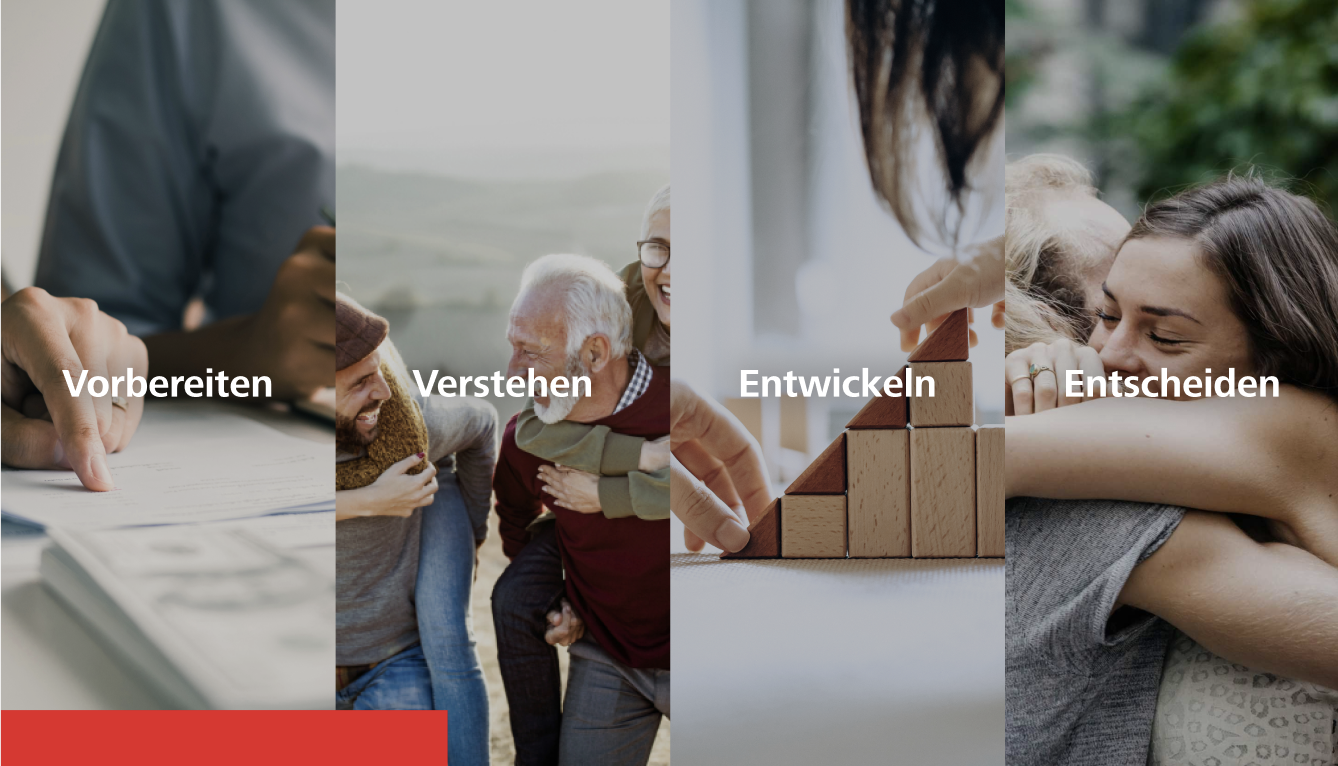
Before designing a single screen, I had to understand the intricate requirements of the investment world.
Interdisciplinary Workshops: I moderated sessions with product owners, compliance officers, and IT leads to define core Use Cases and map the "Ideal Journey."
Requirements Synthesis: I acted as a mediator to harmonize strict regulatory needs with the desire for a flexible, intuitive conversation flow.
-
The goal was to ensure that the advisor never had to search for data—it had to be there exactly when needed.
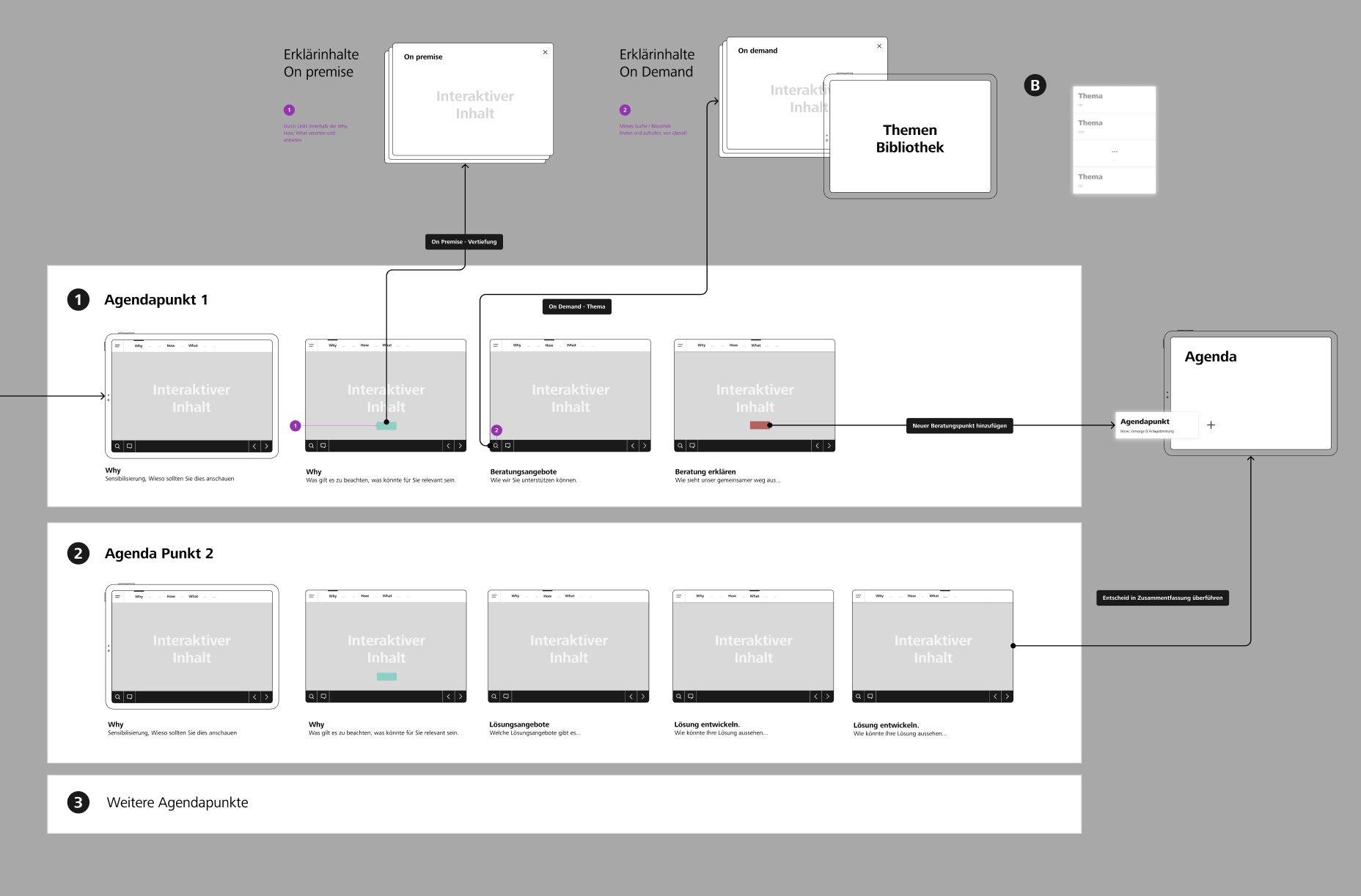
Information Architecture: I redesigned the sitemap and navigation to allow for "Spontaneous Leaps" between topics, breaking the linear constraints of the old system.
User Flow Design: Defined seamless end-to-end flows that integrated preparation, the live meeting, and automated follow-ups into one cohesive logic.
-
To foster ownership and speed, I brought the experts directly into the design process.
Design Studio Workshops: I led collaborative sketching sessions where developers and business stakeholders helped ideate functionalities, ensuring technical feasibility from day one.
High-Fidelity Prototyping: I developed interactive prototypes in Figma, simulating the "On-Point" data delivery to test how the tool feels in a high-pressure advisory situation.
-
Test and optimize consultant flows in real situations and specify them together with the tech team
Usability Testing: I planned and executed testing sessions with actual bank consultants. I analyzed their behavior under "real-life" stress to iteratively optimize the tool’s intuitiveness.
Design Specifications: Created precise documentation and a component-based design language to ensure a smooth handoff to the development team.
The Solution
A collaborative Ecosystem that empowers Advisors and Clients.
The result is a sophisticated pilot software, currently deployed across selected Raiffeisen branches. It transforms the advisory process from a rigid, form-filling exercise into a dynamic, client-centric experience that learns and grows through real-world usage.
"On-Point" Intelligence: The tool intelligently surfaces relevant financial data and regulatory requirements exactly when they are needed, allowing the advisor to stay fully present in the conversation.
Non-Linear Flexibility: Unlike legacy systems, the interface supports spontaneous "topic-leaping." Advisors can switch between retirement planning, wealth accumulation, or risk assessment without losing the current session's progress.
Automated Workflow Integration: By automating data capture and synchronizing follow-up tasks with the administration’s backend, the tool eliminates manual errors and reduces post-meeting administrative work by a significant margin.
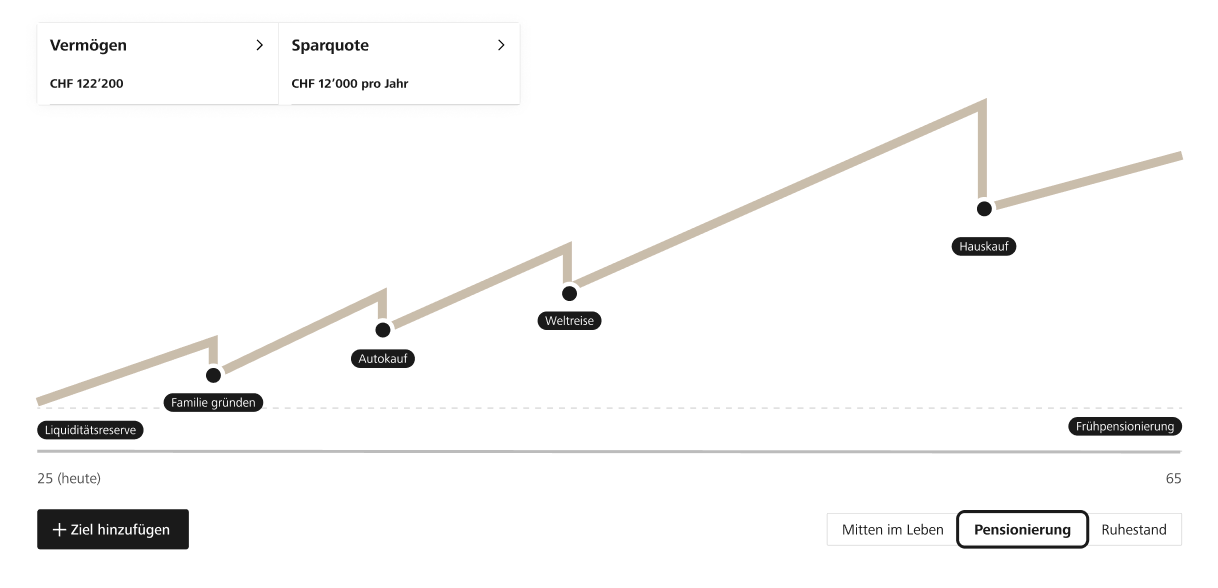
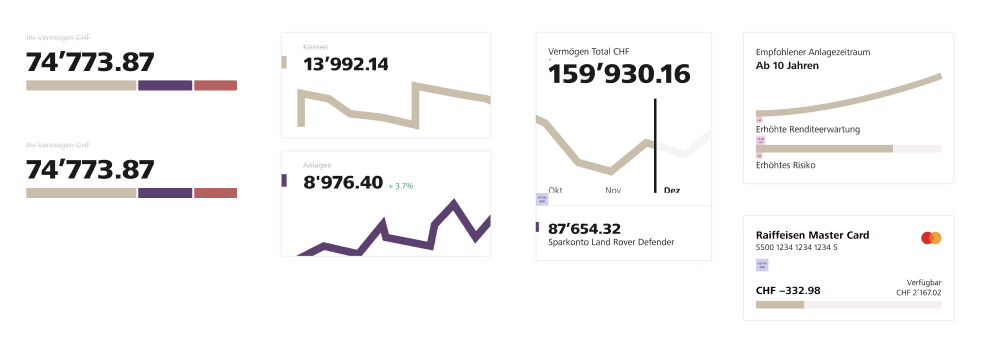
Collaborative Workspace: The interface is designed as a shared "visual stage" for both advisor and client, making complex investment graphs and scenarios transparent and easy to understand.
To ensure long-term success, the software is being rolled out as a pilot. This allows us to gather continuous user feedback from the field, which I use to iteratively refine functionalities and UX patterns before the nationwide scale-up.